

Teach Your Kitten How To Play

Your kitten is going to be oh so playful when they are exploring their surroundings as they grow up. It is important that you as an owner intervenes and have your own play time with your kitty. Click here for the best ways to play with your kitten and other important information for mischievous kittens!
My dog has been bitten by a snake. Will he die?
“It depends on the species of snake. There are many deadly snakes in Australia – below we have listed the top ten deadliest species.”
Top 10 Venomous Australian Snakes
- Eastern Brown Snake
- Western Brown Snake
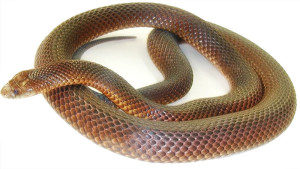
- Common Tiger Snake
- Inland Taipan
- Eastern Taipan
- King Brown Snake
- Common Copperhead
- Eastern Small-Eyed Snake
- Southern Death Adder
- Common Black Snake

What are the signs of snakebite?
When an animal is bitten by a snake, it is generally bitten on the nose (from sniffing in undergrowth) or in the paw area.
GENERAL SIGNS:
- Drooling
- Trembling
- Excitement
- Vomiting
- Collapse
- Dilated pupils
- Rapid pulse
Symptoms often can occur within 15minutes but sometimes later depending on the age of the snake. Generally speaking the baby snakes are considered far more dangerous as they do not have a control on the reflex venom release whereas adults do. This is not to say that adults are not dangerous.
How is a diagnosis of snakebite envenomization made?
Diagnosis is primarily made on medical history and clinical signs. If the type of snake is unknown, diagnosis and treatment will be directed at the presenting clinical signs.
What first aid treatment should I do on my way to the veterinarian?
“If possible, carry the dog rather than allowing the dog to walk.”
1. Minimise the animal’s movement:
The poison will spread a lot faster throughout the body if there is excessive movement. Keep the animal quiet and calm
2. Ignore the bite wound:
Do not attempt to suck, squeeze or cut the venom out of the wound, this will increase the blood supply to the area and make the condition worse
3. Lower the limb:
If it is the leg, paw or tail that has been bitten, keep the limb below the heart. This will slow the spread of the poison
4. Bandage the whole limb:
Apply a firm bandage over the whole limb to immobilise it and therefore reduce the rate at which the poison can spread.
5. Apply an Ice Pack:
Apply an ice pack to the area and firmly bandage it in place. This will slow the spread of the poison.
6. See a Veterinary Surgeon immediately:
When treated properly, with Anti-venom and other medications, further complications can be prevented and lives can be saved. You have up to 2 hours for effective anti—venom application so it is important not to panic, jus t get to a vet as soon as you safely can. Be prepared the trip to the vet may be unpleasant, if you have help that will take a lot of stress off you and will hopefully prevent you pet from bouncing around in the car, remember POINT 1.
What is the treatment for snakebite envenomization?
Venomous snakebites are medical emergencies requiring immediate attention. Before treatment is begun, it must be determined whether the snake is venomous and whether envenomization occurred. Fortunately, a venomous snake may bite and not inject venom (“dry bites”). When no envenomization occurs, or if the bite is inflicted by a non-venomous snake, the bite should be treated as a puncture wound. Non-venomous snakebites are generally treated with wound cleaning, antibiotics, anti-histamines and anti-inflammatory medications as indicated.
“The correct treatment of venomous snakebites depends on the type of snakebite.”
The correct treatment of venomous snakebites depends on the type of snakebite. Treatment to counter shock, low blood pressure, infection and respiratory distress is indicated in most cases of venomous snakebites.
What is the prognosis for a dog bitten by a snake?
The prognosis depends several factors, including: the size and species of the snake; the amount of venom injected; the number of bites; the location and depth of the bite (bites to the head and body tend to be more severe than bites to the legs or paws); the age, size, and health of the dog; the time elapsed before treatment; and the dog’s individual susceptibility to the venom. The location of the bite is important. Swelling from bites around the muzzle and face can lead to breathing difficulties due to obstruction of the airway.
“The location of the bite is important.”
DON’T make the fatal mistake of leaving your dog in the car this summer.
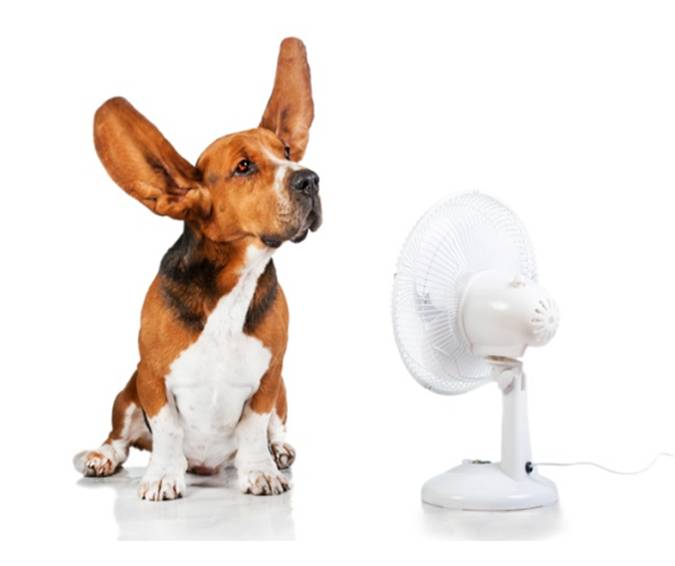
Dogs are different to humans, they don’t have the same safety sweating mechanism that we have to stay cool. They can only perspire by panting and are consequently vulnerable to a sudden rise in body temperature during hot days.
If you think it is safe to leave your dog in the car, even with the windows open you are sadly mistaken.
The inside temperature of a car can reach over 50°C after just five minutes when the temperature outside is 32.5°. The testing also found that in less than two hours the inside temperature of the car reached 75°C. Additionally, having tinted windows, leaving the car in the shade or having a light colored car didn’t reduce the cabin temperature by a noteworthy amount. All of these tests were conducted by RACQ.
The RSPCA are running campaign about how dangerous it is to leave your dog in the car – “You could lose your best mate in just 6 minutes” http://justsixminutes.com.au/
It’s not just cars that can heat up in the summer months; people often forget how hot your house can get while you are at work.
Sunlight seeps into your house where your dog is and can quickly cause an unbearable environment that the dog cannot escape. Old houses with little or poor insulation and small rooms are more probable to reach dangerous temperatures.
What to look out for if your dog is overheating:
- Deep panting.
- Rapid Heart rate
- Dry or pale gums.
- Dehydration
- Increased drooling.
- Heavy and rapid breathing
Arranging a cool environment for your dog to relax while you are at out or at work facilitates their comfort but more significantly their safety and survival.
How to help your dog stay cool:
- Always having a bowl of water available to your dog, that is not in direct sunlight
- have a couple of containers in case one is spilt over
- put ice in the water to keep it cool for longer
- Remove heavy quilts and bedding from your dog’s bed/kennel
- Keep blinds and curtains closed during hot days to stop direct sunlight entering
- keep a fan or air-conditioner on in an area that is likely to heat up
- If possible keep your dog inside
- If your dog is kept outside make sure there is a shady spot
- Be cautious not to overwork your dog, take it on relaxing walks or give it a break from walks on scorching days
- Walk your dog in the morning or early evening when the weather isn’t so hot
- Wetting your dogs paws and misty water on their face, this a great option as they control their inner temperature through their feet
What to do if you think your dog is showing signs of heatstroke?
Firstly take your dog out of the heat into a cool shaded area. Allow your dog to drink a small amount of cool water. Wet your dogs paws with some water and dampen the dog with a small amount of water, don’t drenched your dog with water as the body temperature may change suddenly which can lead to other problems. If your dog is showing no sig n of improvement contact your vet or take it to a vet hospital.
If you have any questions regarding your dog over heating or heat stroke, please don’t hesitate to contact Pet Universe to speak to one of our friendly team members.
North Gate: 08 8369 3111
Broadview: 08 8266 4666

What are Complete Care Packages?
Complete Care Packages (CCP) is an Annual Preventative Health Care plan for your pet. The CCP includes a range of products and services to keep your loved one happy and healthy. There are a range of packages but generally all the packages include: vaccinations, flea & heartworm treatments plus additional goods with an annual saving of $200 or more per year.
Pet Universe offer Monthly Payment Plans, the package can be paid in 12 monthly installments which helps with budgeting.
Regardless of the age of your dog or cat, we will find a health care plan that fits for you. We offer Adult Dog and Cat, Senior Dog and Cat and Puppy and Kitten Plans. To view our range of packages and what is included, click here.
What are the advantages of purchasing the CCP?
These packages are an easy way to get the best healthcare for your pets. It enables you to keep your pet up to date with their vaccinations and checkups.
The cost savings equate to over $200, compared to if you were to buy everything individually. It gives you peace of mind that everything is taken care of your pet for you. Pet Universe will send reminders of when vaccinations and other important checkups are due. Excitingly the new improved CCP now have a free dog lead or cat carrier luggage tag, PLUS CCP members don’t have to pay the Sunday consultation surcharge fee.
All the products and services included in our annual preventative healthcare plans are those we use ourselves on our own pets – so they are tried and trusted. The aim of the packages is to make gold standard healthcare affordable and easy. It’s all part of living up to the Pet Universe motto… “Healthcare from your pet’s point of view”.
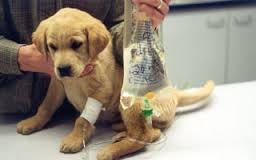
As the weather warms up so the incident of Parvovirus increases and we are hearing reports of multiple cases of Parvovirus currently being treated in Adelaide’s Northern Suburbs? We urge all pet owners to be vigilant with vaccinating their puppies and adult dogs against this deadly virus.To read more click here
The best protection and prevention against infectious diseases in your pet is their annual vaccinations.
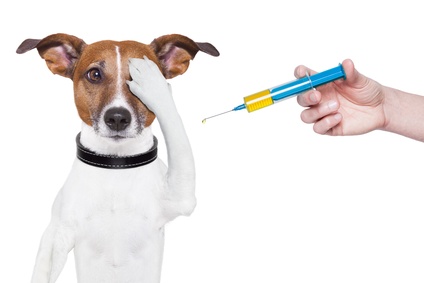
It’s easy to forget that sadly our pets cannot talk, they can’t tell us what they are feeling, or if something is troubling them. For this reason alone it is so important that your furry loved ones have their annual or biannual checkups (for seniors) and keep up to date with their vaccinations. At Pet Universe we perform vaccinations on dogs, cats, rabbits and ferrets.
At the time of vaccination an annual health check is performed which includes an 18 point physical examination. However, veterinarians can’t see what’s going on inside an animal’s body, this is why blood and urine tests are needed to complete the whole picture of the animal’s well-being. Dogs in particular are known to hide their illnesses as a survival technique so they don’t seem vulnerable.
Vaccinations are a preventative measure to protect your loved one from a range of diseases such as, Parvovirus, Distemper, Hepatitis, Parainfluenza, Bordetella and many more. Did you know that over the past year there has been a Heartworm outbreak in Australia, including 24 cases in Adelaide, this is why parasite protection is vital, click here for more information.
These preventative vaccinations could lead to substantial cost saving when compared to the financial outlay required to treat your pet for the actual disease. But most importantly vaccines will help ensure your pet lives a happy, longer and healthier life. Remember prevention is better than cure. To simplify all your pet’s annual preventative healthcare needs and to save you $200 or more annually we have put together our Complete Care Packages which are also available on a monthly payment plan. Click here for more information about our packages.
The most prominent positives from vaccinations is the prevention of disease, death and death from illness. Knowing your cat or dog is vaccinated enables you to socialize your pet worry free without having to consider catching an illness. Although it is important to note that your pet doesn’t need to come into contact with another dog or cat to catch some of the viruses. Many of the viruses live in the environment, for example Heartworm, which is transmitted via Mosquitoes. Additionally your pet will not be accepted for boarding, daycare or grooming if the animal is not up to date with its vaccinations.
How often should your dog or cat be vaccinated?
Dogs
Your dog should be vaccinated yearly, unless they are a puppy. Pet Universe’s protocol for vaccinations start at the age of 6-8 weeks. The vaccinations occur monthly, resulting in a total of 3 vaccines, with their last vaccination occurring around the 14-16 week mark.
For adult dogs they receive an annual C5 vaccination, which prevents against 5 potentially fatal viruses: Parvovirus, Distemper, Hepatitis, Parainfluenza and Bordetella bugs. Parainfluenza and Bordetella can both lead to Kennel Cough.
If a dog misses their yearly vaccines, they will need an extra booster a month later, leading to even more costs. If you keep up with your dog’s vaccination this will lead to cost savings, compared to if you had to pay for an extra shot if you missed a yearly booster.
Cats
Similar to dogs, your cat should be vaccinated yearly unless they are a kitten. Pet Universe’s protocol for vaccinations start at the age of 6-8 weeks.
The two main vaccines for felines is the FIV (Feline Immunodeficiency Virus) and the F3 vaccination.
The FIV vaccination includes 3 injections and 2 for F3 vaccinations. The FIV vaccine starts at weeks 6-8, occurring every 2 weeks. For the F3 vaccines, this begins at 8 weeks, and then one in a month to occur at the same time of the final FIV vaccination.
The cat will have an annual booster of F3 and FIV. F3 vaccination prevent against Feline Herpes Virus, Feline Calicivirus and Feline Panleukopaenia. The FIV vaccination prevents against Feline Aids.
FIV is a potentially fatal viral disease that weakens the immune system of a feline. FIV is the Feline equivalent to human AIDS, alike human AIDS there is no cure or treatment. The only way to help prevent this awful disease is with the vaccine which aids in prevention of the infection of FIV.
FIV is a common virus in stray and outdoor cats and these cats are at a higher risk of contracting this disease. It is transmitted through fighting and bite wounds, with an infected cat biting a healthy cat, the virus being spread via saliva.
Cats infected with FIV may stay healthy for a number of years, while other infected cats show no signs of the disease, this is why prevention is so important. Some infected cats may show signs of fever, loss of appetite and diarrhea. As the disease becomes more serve, symptoms such as weight loss, poor coat and sores in and around the mouth may become prevalent. Sadly the immune system eventually becomes too weak to fight off other viruses or diseases and the cat will die from one of the consequential infections.
It is crucial for your pet’s health that they are kept up to date with their vaccinations. If you have any queries regarding the protocol we use for vaccinations or any other questions, please contact Pet Universe to speak to one the members of our friendly team.
North Gate: 08 8369 3111
Broadview: 08 8266 4666
How often should your pet visit the vet?
It is important for your pet to visit the vet annually or biannually (for seniors ) for a checkup.
It is known that dogs and cats age faster than humans, therefore they must go to the vet more often than we go to the doctor. It’s a common known fact that one year of a pet’s life is equivalent to 5- 7 human years, but this is quite simplified.
Puppies mature rapidly during the first year of their life and are considered to be teenagers after their first birthday. After 24 months they are approximately 25 years old. At this point the aging process slows down to about 7 years for smaller breeds and 5 years for larger breeds.
But the most important thing to note is that dogs and cats age faster than we do and must visit the vet on average of 2 times a year, especially if they are geriatric.
To put this into perspective, if we get a physical checkup yearly, that’s the equivalent to taking your pet to the vet every 4-5 years, which is not suitable if you want your pet to live a happy and fulfilled life.
Putting your dog or cat onto a preventative health care plan is a great way to ensure your pet is always up to date with their vaccinations and other preventative health care issues. Pet Universe offers a Complete Care Package for all stages of your pet’s life, Click here for more information .
Heartworm disease is a severe and potentially fatal illness. It is caused by a blood-borne parasite known as Dirofilaria Immitis. Adult heartworms are found in the heart and adjacent large blood vessels of infected dogs.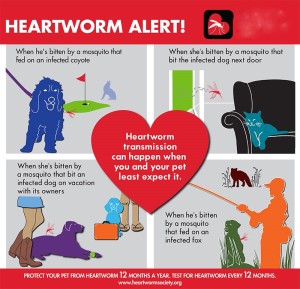
Generally in South Australia pet owners are diligent with keeping their pets up to date with their vaccinations. But as compliance drops and lapses in medication occur, then Heartworm begins to spread. Did you know that currently there are 24 confirmed cases of heartworm in dogs in Adelaide?
The process that you have to go through once your dog is infected with heartworm is extremely stressful for yourself and the dog, let alone how much it will cost to attempt to treat them for this disease. Treatment for Heartworm is not always successful, this is why keeping up with your vaccinations and heartworm injections is vital.
Prevention Is Better Than Cure
If you opt for the yearly injection lasting a whole year, instead of monthly prevention, you don’t have to worry about forgetting to give your dog their medication. Pet Universe offers the yearly injections which are included in our Complete Care Packages for further information click here. For more information about the importance of vaccinations, click here.
Myths About Heartworm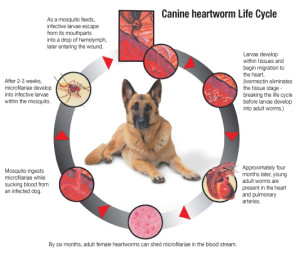
It is a common myth that heartworm disease doesn’t affect dogs in their area, but canine Heartworm disease occurs all over the world and exists in Adelaide. There is currently a Heartworm outbreak in Australia with 24 confirmed cases in Adelaide and in particular there is a large outbreak in Mackay, Queensland.
People often think that if they don’t socialize their dog with other dogs, they won’t catch Heartworm disease. This myth is concerning as many people don’t understand that transmission requires a mosquito as a host; the disease isn’t spread directly from dog to dog.
Thankfully there are great preventions for Heartworms in dogs, this disease is easily prevented but complicated and expensive to cure. This is why ideally heartworm injections or other forms of heartworm medication are so important for dogs. It is impossible to tell if a mosquito is infected, this is why prevention is so important. Additionally approximately 9% of foxes are diagnosed with Heartworm; foxes are becoming more prevalent in metropolitan areas, another reason why we all must keep up with prevention of Heartworm to keep your dogs safe.
Signs
Unfortunately there are no prominent signs to look for, until the disease continues to get worse and will start to show signs of heart failure.
For more information please don’t hesitate to call Pet Universe to speak to one of our Veterinarians.
Northgate: 08 8369 3111
Broadview: 08 8266 4666
Dear Client,
The Australian Veterinary Association (AVA) is partnering with a select group of Veterinarians around the country, to undertake research that will help us and other Veterinarians to improve and build on the work that we do for pets. So, in order to serve you better, we are asking you to participate in a short pet owner satisfaction survey. All responses will be kept strictly confidential. As your veterinarian, we will receive general results but will not have access to your completed survey or your answers. The national data will then be published for Veterinarians around the country to learn more about pet owner attitudes.
Please note: Not every veterinary clinic in Australia participates in the Client Satisfaction Survey. If you did not receive a direct invitation or a bookmark from your veterinary clinic, then your clinic does not participate in the survey. Please do not fill out the survey unless you have been asked by your veterinary clinic to do so.
Please click here to complete the survey. https://www.surveymonkey.com/s/WLJF3MY
Regards
Dr.Chris Lee
Principal Veterinarian
Pet Universe Veterinary Centres